Crafting a Soothing Evening Routine for Your Little One
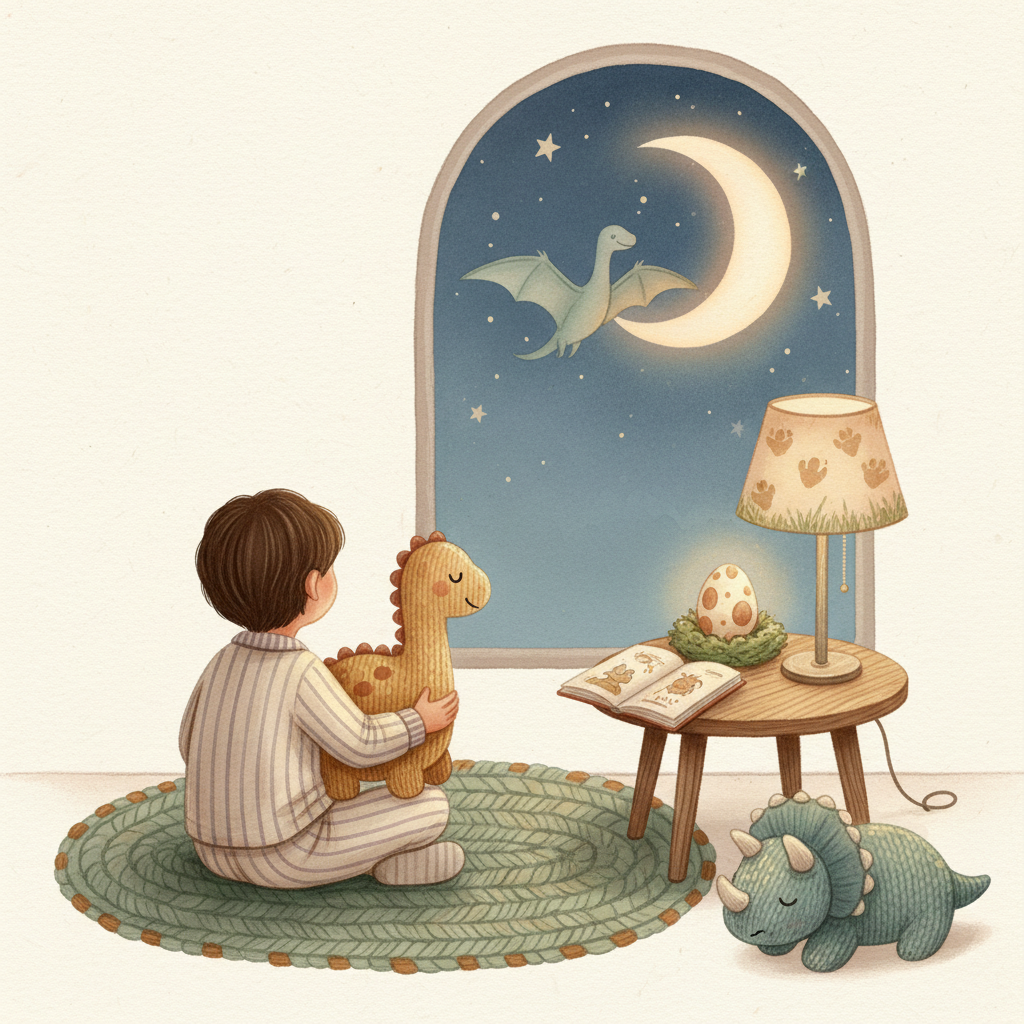
Every parent knows the feeling: as evening draws in, the race against bedtime begins. For our little paleontologists, the transition from lively play to peaceful slumber can sometimes feel like traversing uncharted dinosaur territory. But what if we told you that a thoughtful, consistent evening routine for kids could transform those chaotic moments into calm, connected ones? Pediatric experts often suggest that a predictable sequence of activities before bed can greatly benefit a child’s sleep and emotional regulation.
The Power of Predictability Around Bedtime
Children thrive on routine. Just as a Brontosaurus found comfort in familiar grazing grounds, your child finds security in knowing what to expect. An evening routine isn't just about getting to bed; it's about creating a sense of order and calm that signals to your child's body and mind that it’s time to wind down. The American Academy of Pediatrics emphasizes the importance of consistent bedtime routines, noting that they are associated with improved sleep outcomes in young children [https://www.healthychildren.org/English/healthy-living/sleep/Pages/Establish-a-Bedtime-Routine.aspx]. This predictability can help reduce bedtime battles and contribute to a more restful night for everyone.
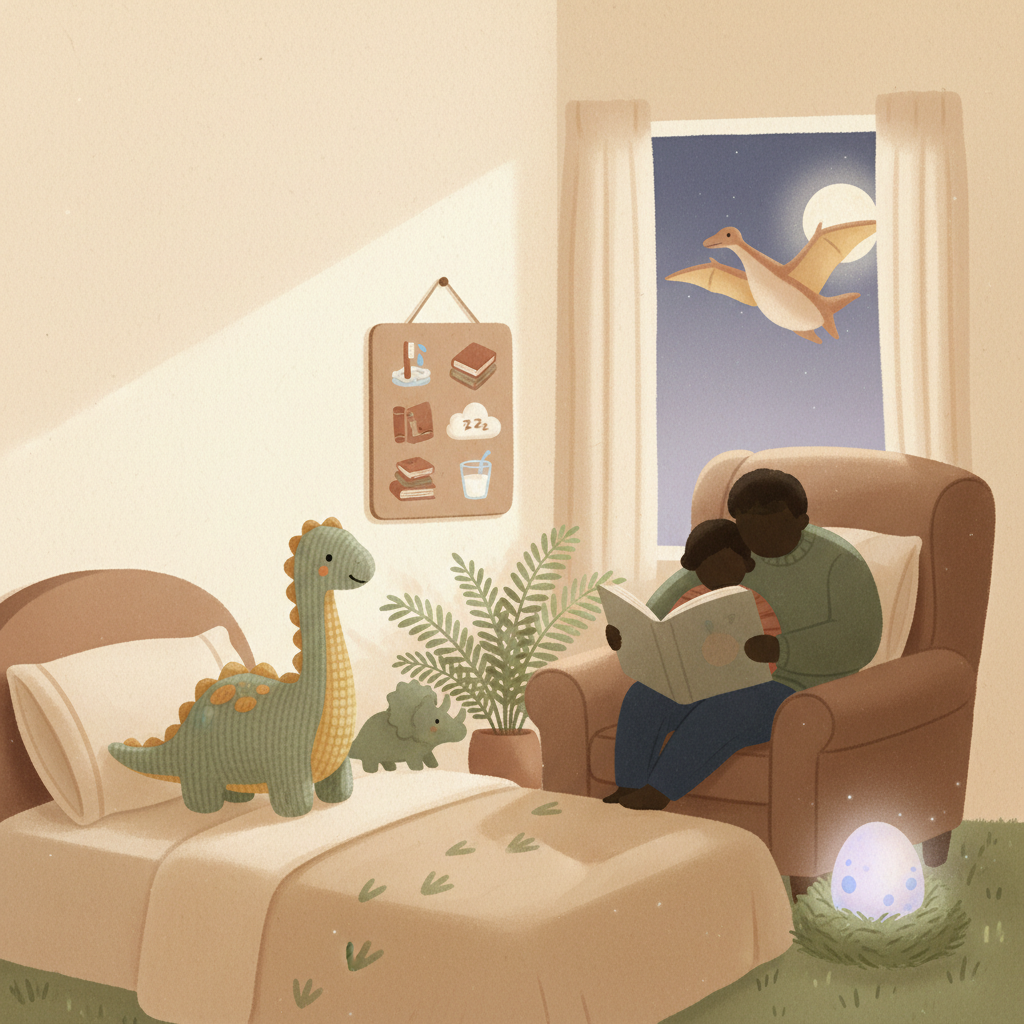
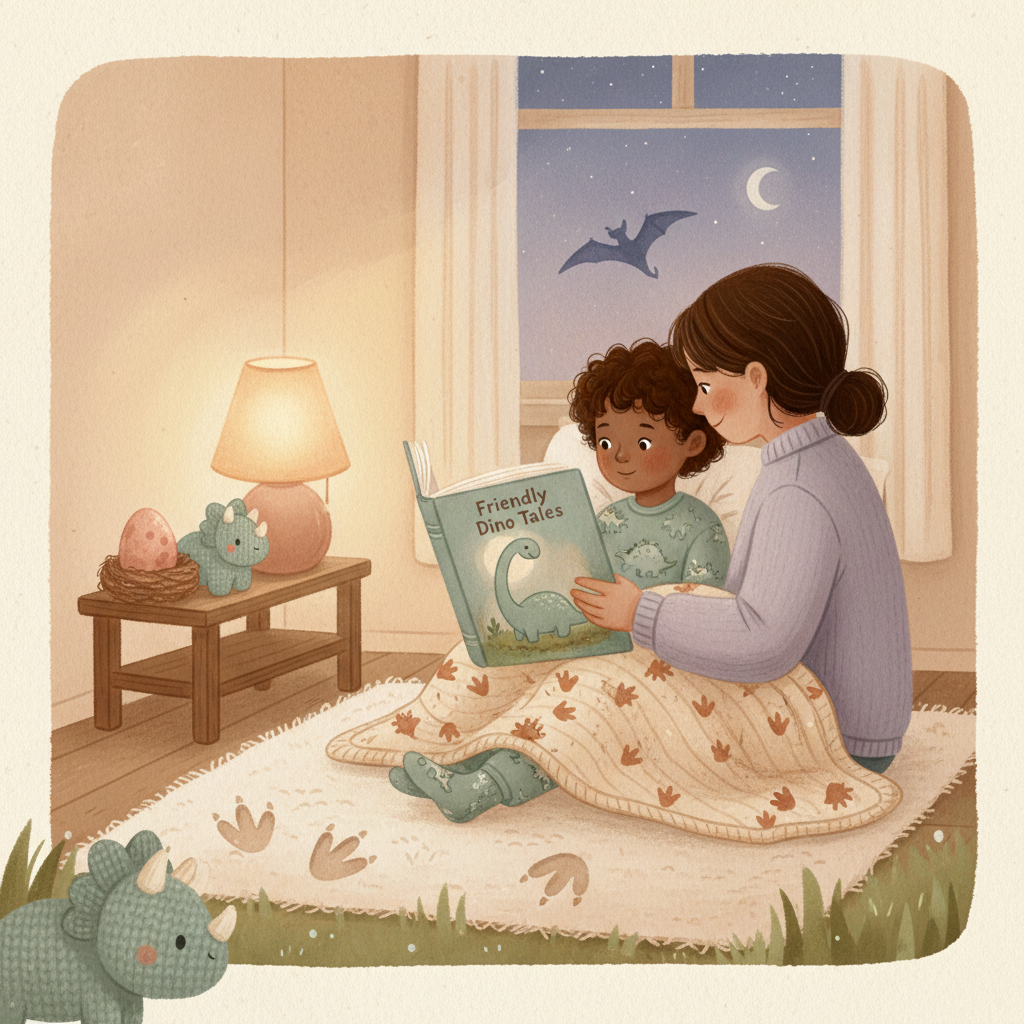
Beyond sleep, a well-established evening routine can also enhance family connection. These moments before bed offer a prime opportunity for parents and children to share quiet time, review the day, and connect emotionally. It's a chance to build cherished memories, whether through reading together or sharing gentle conversations about what made them roar with happiness (or stomp with frustration!) during the day.
Building Blocks of a Peaceful Evening Routine
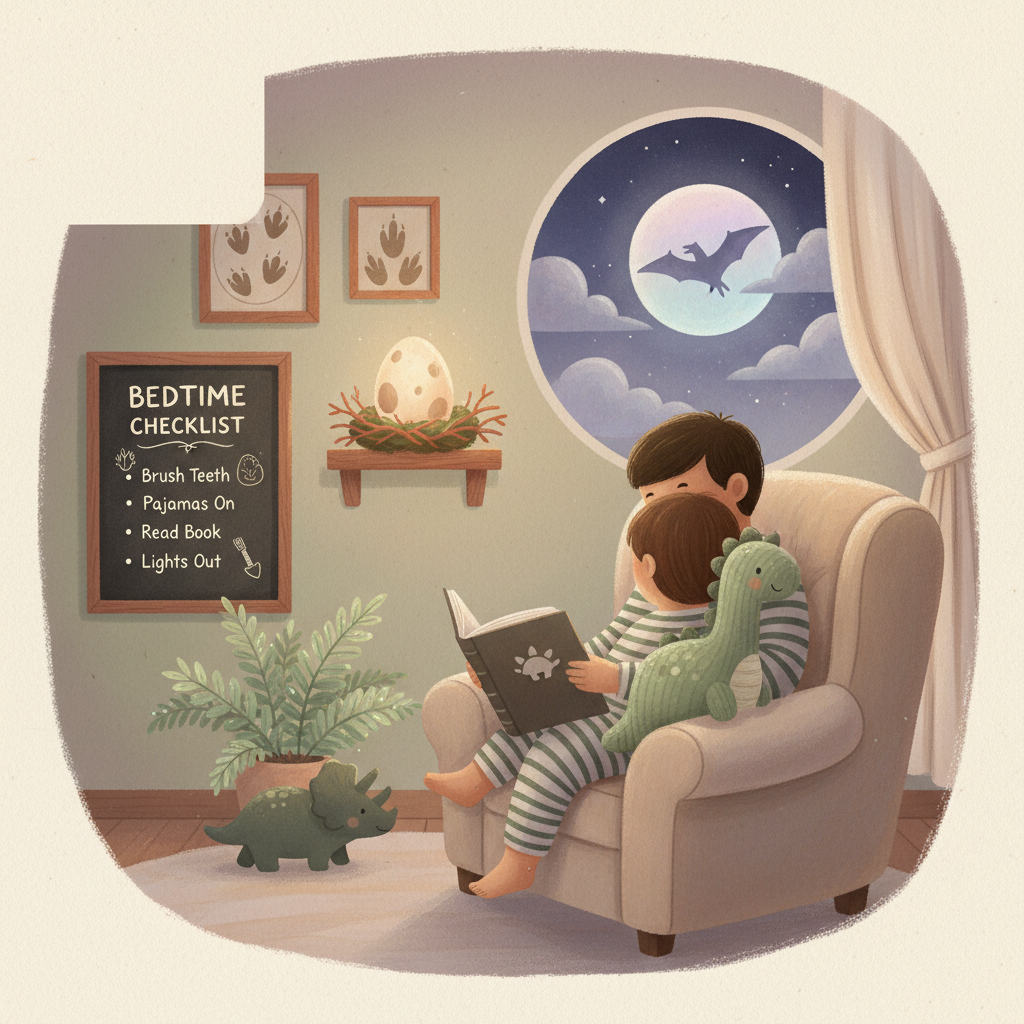
Creating an effective evening routine doesn't require elaborate plans. Often, simplicity and consistency are key. Think of it as a series of gentle, winding-down steps, much like a sleepy dinosaur settling into its nest. Here are some building blocks pediatric experts frequently suggest:
- Dinner Time: Aim for a consistent dinner time that allows for digestion before bed. The National Institutes of Health suggests that eating too close to bedtime can interfere with sleep [https://www.nih.gov/news-events/nih-research-matters/sleep-loss-may-be-linked-unhealthy-eating-behaviors]. A calm, device-free mealtime can also be a wonderful way to reconnect as a family after a busy day.
- Bath Time (Optional): A warm bath can be incredibly relaxing for some children, helping to signal the body to prepare for rest. However, not every child enjoys a nightly bath, and that
Further reading from trusted pediatric sources:
My Little Dino
A calm 60-second bedtime ritual for dinosaur-loving little ones.
Parent-led, screen-soft, and made for 3–7 year olds who'd rather hear about a sleepy brontosaurus than brush their teeth.
Sources
- Establish a Bedtime Routine — American Academy of Pediatrics
- Sleep Loss May Be Linked to Unhealthy Eating Behaviors — National Institutes of Health
- Bedtime Routine for Children — Sleep Foundation
- Bedtime Routines — American Academy of Pediatrics
- Bedtime Routines — Zero to Three
- Sleep and Children — Cleveland Clinic
Educational content only. Not medical advice. Please consult your pediatrician about sleep concerns.