Crafting a Calming Night Routine for Your Little Dino
Establishing a Roaringly Good Night Routine for Your Little Dino
Bedtime can sometimes feel like an epic adventure with a tiny, reluctant T-rex. But what if it could be a calm, predictable journey to the land of dreams? For parents of 3-6 year olds, a well-structured night routine isn't just about getting your child to sleep; it’s about creating a peaceful transition from the day's excitement to rest. Pediatric experts consistently highlight the benefits of consistency and gentle winding-down activities for young children. Let's explore how you can craft a calming night routine that works for your family and helps your little paleontologist drift off to sleep.
Why a Consistent Night Routine Matters So Much
Imagine the world from your child's perspective: full of new discoveries, exciting games, and endless energy. The idea of stopping all that fun for sleep might seem unfair! This is where a consistent night routine becomes your secret weapon. According to the American Academy of Pediatrics (AAP), routines provide children with a sense of security and predictability, which can be incredibly comforting, especially during times of transition like bedtime. This predictability signals to their bodies and minds that it's time to wind down, making the shift to sleep much smoother. The Sleep Foundation also emphasizes that a regular bedtime and consistent routine are crucial for establishing healthy sleep habits in young children, contributing to better sleep quality and duration https://www.sleepfoundation.org/children-and-sleep/bedtime-routine.
A predictable sequence of events helps your child anticipate what comes next, reducing resistance and anxiety. Think of it like a train on a track: each stop on the routine helps them get a little closer to their sleepy destination. Without a clear path, little ones might get sidetracked, leading to longer bedtimes and more frustration for everyone. For more ideas on how to set up a beneficial routine, you might find our post Crafting an Easy Bedtime Routine for Your Little Dino helpful.
The Pillars of a Peaceful Pre-Sleep Sequence
Creating an effective night routine doesn't require an elaborate, hour-long production. Instead, it focuses on a few key elements that gently signal to your child that it's time for rest. The most important aspect is consistency. Doing the same things in the same order each night helps children recognize the cues for sleep. Often, a routine for children in the 3-6 age range might last between 20-45 minutes.
"Consistency is key when it comes to children's sleep routines. A predictable sequence of events helps children feel secure and understand what to expect, making the transition to sleep much smoother." — The Sleep Foundation
Here are some pillars to consider incorporating into your little dino's night routine:
- Dinner at a consistent time: Eating dinner around the same time each evening helps regulate your child's internal clock. The National Institutes of Health (NIH) suggests that regular meal times, in conjunction with regular sleep times, contribute to a healthy circadian rhythm https://www.nih.gov/news-events/nih-research-matters/how-sleep-affects-your-health. Aim to finish dinner at least an hour or so before bedtime to allow for digestion.
- Wind-down play: Before starting the official bedtime sequence, shift from energetic play to calmer activities. This might involve quiet building blocks, drawing, or even a relaxed chat about their day. This helps your tiny T-rex fan release some energy in a gentle way rather than getting overtired right before bed.
- Warm bath or shower: A warm bath can be incredibly relaxing, signaling to the body that it’s time to wind down. The drop in body temperature after exiting the bath can also promote sleepiness. If a full bath isn't feasible every night, a quick warm washcloth wipe-down can still offer a calming ritual.
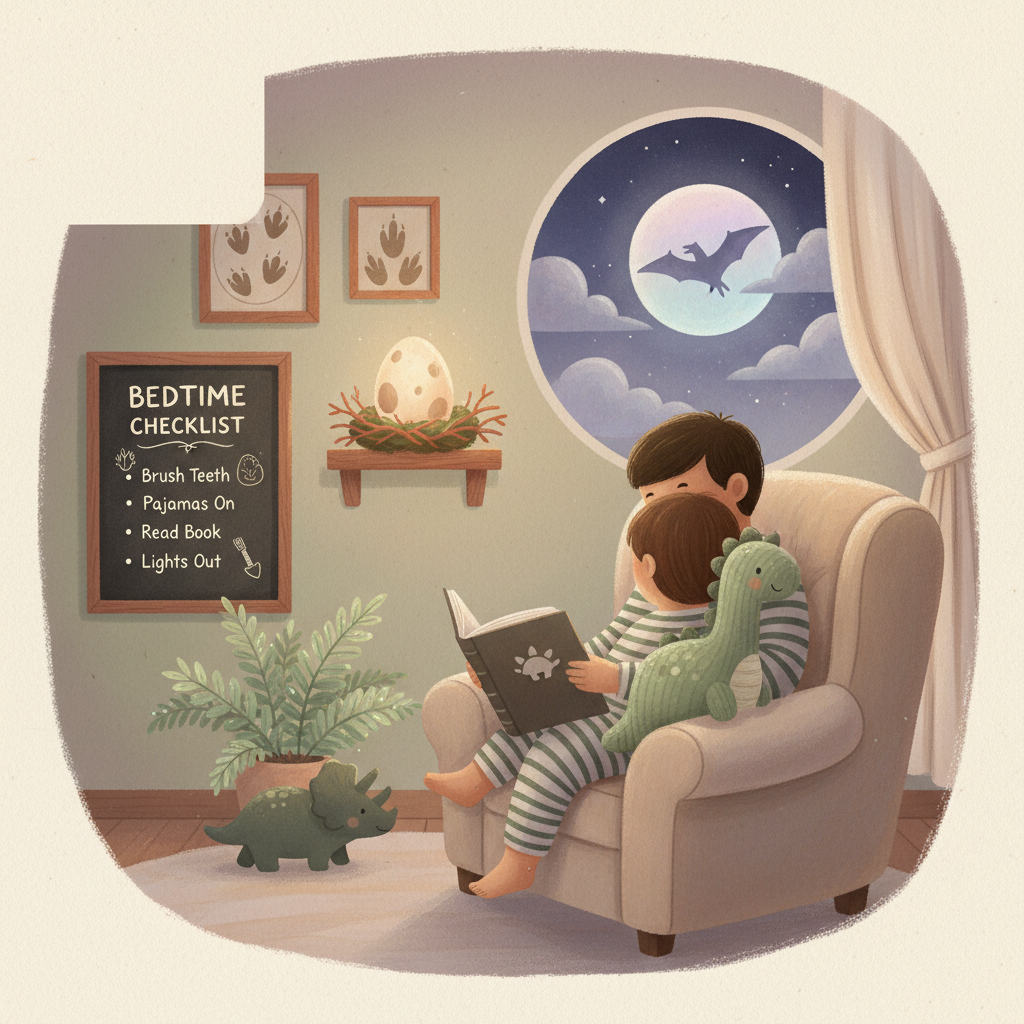
- Pajamas and teeth brushing: These essential hygiene steps are great anchor points in any routine. Involving your child in choosing their pajamas or helping them brush their teeth can give them a sense of autonomy within the routine. The American Academy of Pediatrics emphasizes the importance of good dental hygiene from an early age https://www.healthychildren.org/English/healthy-living/oral-health/Pages/default.aspx.
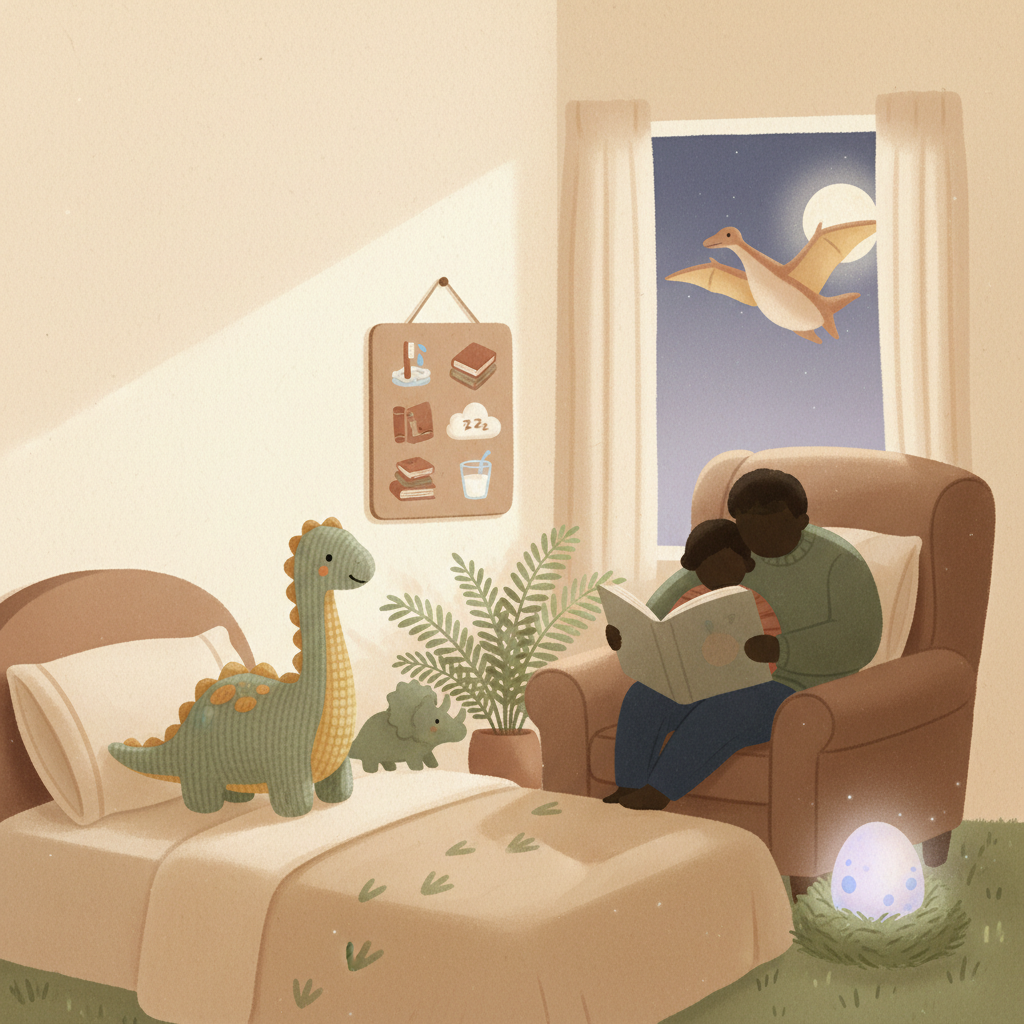
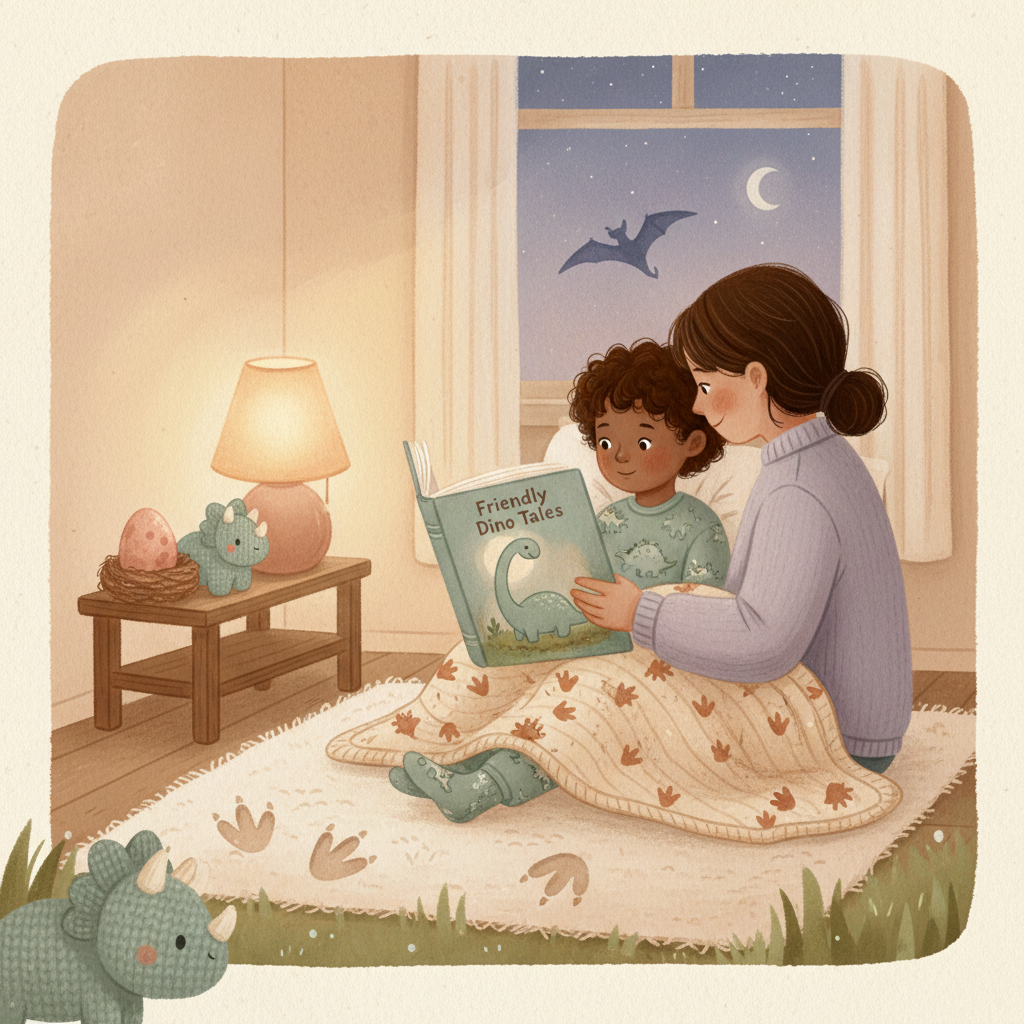
- Quiet reading or storytelling: This is arguably one of the most cherished parts of a night routine. Snuggling up with a book, reading a favorite dinosaur story, or telling a gentle tale provides connection and a calm focus. It also encourages language development and a love for reading. Zerotothree.org highlights story time as a wonderful way to promote bonding and prepare young children for sleep https://www.zerotothree.org/resources/series/bedtime-basics.
- Cuddles and goodnight wishes: A final hug, a few whispered words of love, and a clear "goodnight" help cement the end of the day and reassure your child. This emotional connection is vital for their sense of security. Make sure to keep this part brief and loving, avoiding dragging it out, which can unintentionally encourage stalling.
Minimizing Disruptions: Taming the Digital Dinosaurs
In our modern world, screens are ubiquitous. While they offer entertainment and education, their presence at bedtime can be quite disruptive to a child's sleep. The light emitted from screens, particularly blue light, can interfere with the production of melatonin, a hormone that helps regulate sleep. For this reason, the American Academy of Pediatrics suggests limiting screen time, especially in the hour leading up to bedtime https://healthychildren.org/English/healthy-living/sleep/Pages/Healthy-Sleep-Habits-for-Young-Children.aspx.
Consider creating a "screen-free zone" or "digital sunset" at least 60-90 minutes before your child's planned bedtime. This means no tablets, no TV, and no smartphones for your little one. Instead, encourage quiet, unplugged activities like those mentioned above. This dedicated screen-free time not only aids in melatonin production but also creates a more relaxed atmosphere, free from the stimulating effects of fast-paced digital content. Think of it as allowing your child's internal brontosaurus to calm its mighty brain before resting.
Flexibility Within the Framework
While consistency is paramount, life with a 3-6 year old is rarely perfectly predictable. There will be sick days, holidays, travel, and unexpected events that throw a wrench into even the most well-oiled routine. The key is to be flexible within the framework of your established sequence. If you miss a step one night, don't fret. Simply pick up the routine at the next logical point.
For example, if a late playdate means you skip the bath, just move straight to pajamas, teeth, and a story. The overall structure and the calming signal of "wind-down time" will still be present. The Cleveland Clinic reinforces this idea, noting that while routines are beneficial, a little flexibility can help parents manage the day-to-day realities without undue stress https://my.clevelandclinic.org/health/articles/14449-sleep-patterns-for-children. The goal isn't perfection, but rather a gentle rhythm that supports healthy sleep habits most nights.
As your child grows, their needs and interests will evolve. What worked when they were three might need slight adjustments when they turn five. Be open to adapting the specific activities while maintaining the foundational principle of a consistent, calm wind-down. For further guidance on adjusting routines as children grow, consider reviewing "A Calm Guide to a Soothing Kids Bedtime Routine." [/blog/kids-bedtime-routine-guide]
Addressing Common Nighttime Niggles
Even with the best routine in place, little ones can sometimes struggle with bedtime. Here are a few common issues and gentle approaches:
- Stalling tactics: "Just one more drink!", "I need to tell you something!", "I have to use the potty again!" These are classic bids for more time. Acknowledge their request calmly, fulfill it if reasonable (one quick drink, one quick potty trip), and then gently redirect back to the routine. Setting clear boundaries and sticking to them is important. For instance, you might say, "After this story, it
My Little Dino
A calm 60-second bedtime ritual for dinosaur-loving little ones.
Parent-led, screen-soft, and made for 3–7 year olds who'd rather hear about a sleepy brontosaurus than brush their teeth.
Sources
- Bedtime Routines for Children — The Sleep Foundation
- How Sleep Affects Your Health — National Institutes of Health (NIH)
- Oral Health — American Academy of Pediatrics (AAP)
- Bedtime Basics — Zero to Three
- Healthy Sleep Habits for Young Children — American Academy of Pediatrics (AAP)
- Sleep Patterns for Children — Cleveland Clinic
Educational content only. Not medical advice. Please consult your pediatrician about sleep concerns.