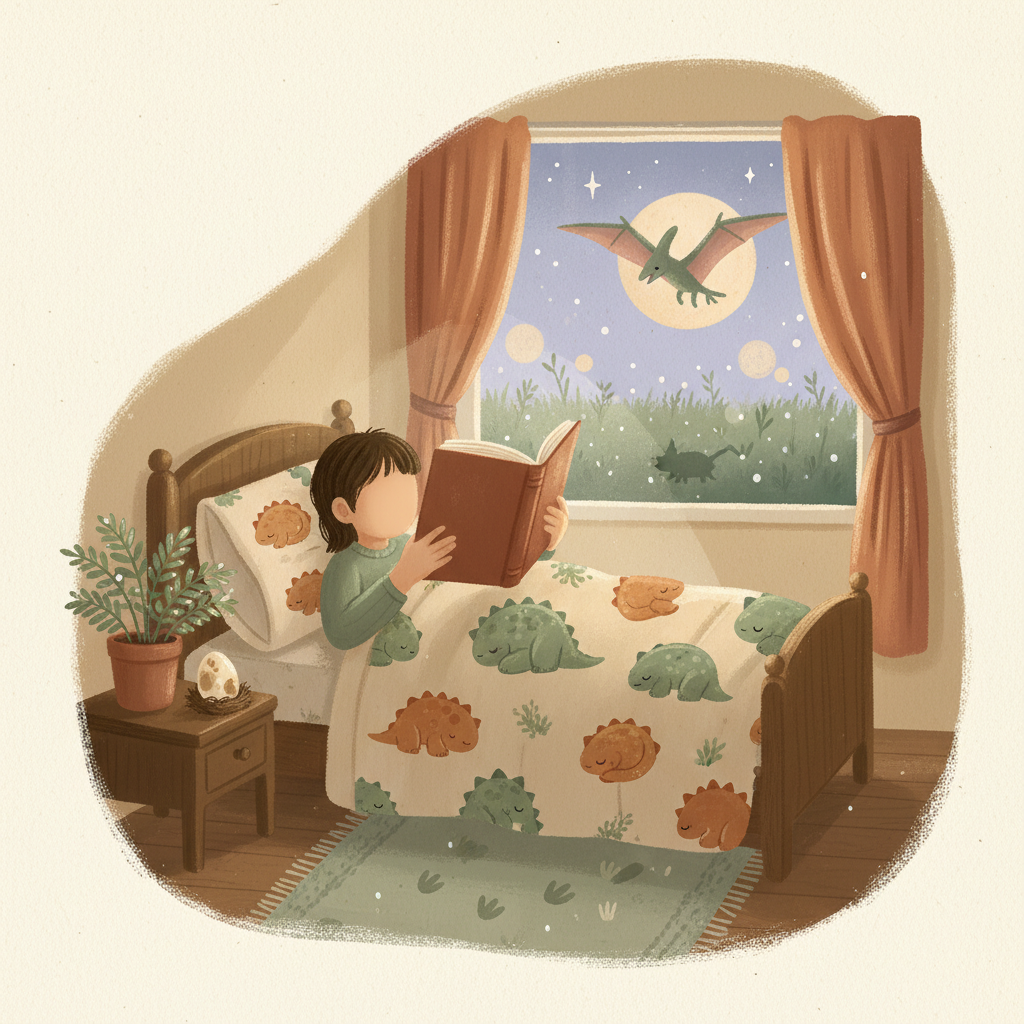
A Calm Visual Bedtime Routine For Kids for Little Dino Fans
Parents searching for a visual bedtime routine for kids are usually looking for something practical: a calmer evening, fewer surprises, and a plan that still feels kind to a small child. This guide keeps the focus on general education from trusted pediatric sleep sources, not medical advice, and it is designed for families with dinosaur-loving kids ages 3–7.
Why predictable bedtime routines help children settle
The Sleep Foundation explains that children often benefit from consistent routines because repeated cues can help the body and mind recognize that sleep time is approaching (Sleep Foundation). For parents, that does not have to mean a perfect schedule every single night. It can simply mean the same few steps in the same general order.
Think of the routine like dinosaur footprints across soft moss: small, familiar marks that show the way forward. A child may not know the clock, but they can recognize pajamas, brushing teeth, dimmer lights, a quiet story, and the same gentle closing phrase.
What pediatric sources commonly emphasize
HealthyChildren.org, from the American Academy of Pediatrics, offers parent education about healthy sleep habits and bedtime routines (HealthyChildren.org). The practical takeaway for families is to make evenings more predictable and less stimulating where possible. That can look like soft lighting, quieter voices, and a short list of repeatable steps.
Cleveland Clinic’s sleep education also describes sleep as part of overall daily rhythm and notes that sleep routines and environment can matter for rest (Cleveland Clinic). For a preschooler or kindergartener, the environment might include a cozy room, a favorite plush dinosaur, and a parent-led wind-down that does not keep adding new choices.
A bedtime routine works best when it feels repeatable for the parent and recognizable for the child.
A simple routine parents can adapt
A helpful visual bedtime routine for kids does not need to be long. Many families do better with a short plan they can actually repeat. The exact steps will vary by home, but a simple structure might include:
- a clear transition from playtime to quiet time
- bathroom, brushing teeth, and pajamas
- one calm connection moment, such as a book or song
- a consistent final phrase
- lights adjusted in a way that signals bedtime
The Sleep Foundation’s child sleep education points parents toward consistency and age-appropriate sleep habits (Sleep Foundation). The goal is not to force a specific script. The goal is to remove some of the uncertainty that can make bedtime feel bigger than it needs to be.
Where My Little Dino fits gently
My Little Dino is a calm 60-second bedtime ritual app for dinosaur-loving kids, created to give families one soft, repeatable moment inside the larger routine. It is not a medical tool and it does not promise sleep outcomes. It is simply a cozy way to make the final part of the evening feel familiar, imaginative, and parent-led.
For a tiny T-rex fan, that might mean ending the night with a sleepy brontosaurus, a quiet nest, or a gentle dinosaur cue that feels the same each evening. Parents can use it as one small piece of a broader bedtime rhythm, then join the waitlist until the app store links are ready.
Keep the routine realistic
HealthyChildren.org’s parent guidance is a useful reminder that sleep habits live inside real family life (HealthyChildren.org). Some nights will run late. Some nights a child will need more reassurance. A routine can still be useful when it bends a little.
Parents may find it helpful to choose the smallest version of the routine for hard nights. Instead of adding more steps, keep the same order and shorten each part. A tiny routine repeated often can be more useful than an elaborate routine that only works on perfect nights.
Gentle reminder
This article is educational content only and is not medical advice. Please consult your pediatrician about any sleep, behavior, or health concerns, especially if bedtime struggles feel sudden, severe, or connected to other symptoms.
Sources
- Children and Sleep — Sleep Foundation
- Healthy Sleep Habits — HealthyChildren.org
- Sleep Basics — Cleveland Clinic
A calm parent checklist
For families who want one practical place to start, keep the evening plan simple, repeatable, and easy for a tired child to recognize. The goal is not perfection. It is a steady rhythm: a quiet cue, a predictable order, and a gentle finish that parents can repeat most nights without turning bedtime into a long negotiation.
- Choose two or three steps that already fit your home.
- Keep the order familiar, even when the exact timing changes.
- Let the room, lights, and voice signal that the day is slowing down.
- Save big conversations, rough play, and stimulating choices for earlier in the evening.
For broader context, parents can compare their routine with trusted sleep education such as Sleep Foundation. My Little Dino can sit inside that routine as a short, cozy dinosaur moment when families want a softer transition into the final part of the night.
A calm parent checklist
For families who want one practical place to start, keep the evening plan simple, repeatable, and easy for a tired child to recognize. The goal is not perfection. It is a steady rhythm: a quiet cue, a predictable order, and a gentle finish that parents can repeat most nights without turning bedtime into a long negotiation.
- Choose two or three steps that already fit your home.
- Keep the order familiar, even when the exact timing changes.
- Let the room, lights, and voice signal that the day is slowing down.
- Save big conversations, rough play, and stimulating choices for earlier in the evening.
For broader context, parents can compare their routine with trusted sleep education such as Sleep Foundation. My Little Dino can sit inside that routine as a short, cozy dinosaur moment when families want a softer transition into the final part of the night.
A calm parent checklist
For families who want one practical place to start, keep the evening plan simple, repeatable, and easy for a tired child to recognize. The goal is not perfection. It is a steady rhythm: a quiet cue, a predictable order, and a gentle finish that parents can repeat most nights without turning bedtime into a long negotiation.
- Choose two or three steps that already fit your home.
- Keep the order familiar, even when the exact timing changes.
- Let the room, lights, and voice signal that the day is slowing down.
- Save big conversations, rough play, and stimulating choices for earlier in the evening.
For broader context, parents can compare their routine with trusted sleep education such as Sleep Foundation. My Little Dino can sit inside that routine as a short, cozy dinosaur moment when families want a softer transition into the final part of the night.
My Little Dino
A calm 60-second bedtime ritual for dinosaur-loving little ones.
Parent-led, screen-soft, and made for 3–7 year olds who'd rather hear about a sleepy brontosaurus than brush their teeth.
Sources
- Children and Sleep — Sleep Foundation
- Healthy Sleep Habits — American Academy of Pediatrics — HealthyChildren.org
- Sleep Basics — Cleveland Clinic
Educational content only. Not medical advice. Please consult your pediatrician about sleep concerns.