Crafting a Relaxing Bedtime Routine for Kids
Crafting a Relaxing Bedtime Routine for Kids: A Gentle Guide to Peaceful Nights
As the sun dips below the horizon, signaling the end of a day filled with explorations and discoveries, many parents find themselves navigating the spirited energy of their little ones. For parents of dinosaur-loving 3-7 year olds, this transition can sometimes feel like trying to herd a playful pack of velociraptors! Yet, cultivating a relaxing bedtime routine for kids can transform this often-challenging period into a cherished time of connection and calm, setting the stage for restorative rest. This isn't about "making" your child sleep, but rather about creating a predictable, comforting sequence of events that gently cues their body and mind that it's time to wind down.
Why a Relaxing Bedtime Routine Matters So Much
Bedtime routines are more than just a series of tasks; they are powerful anchors in a child's day, offering a sense of security and predictability. According to the American Academy of Pediatrics (AAP), a consistent bedtime routine can help children settle down and fall asleep more easily [https://www.healthychildren.org/English/healthy-living/sleep/Pages/A-Good-Night%27s-Sleep-Can-Help-Your-Child-Do-Better-in-School.aspx]. Think of it as a gentle, predictable pathway to dreamland. For a young child, the world is a constant influx of new experiences and sensations. A predictable routine provides a soothing rhythm, reducing anxiety about the unknown and helping them transition from active play to quiet reflection. The Sleep Foundation emphasizes that consistent bedtime routines are associated with better sleep outcomes, including shorter sleep onset latency and longer sleep duration [https://www.sleepfoundation.org/children-and-sleep/bedtime-routine]. This isn't just about getting enough hours; it's about the quality of those hours, which supports healthy growth, learning, and emotional regulation for your little one.
Establishing these rituals early on can also foster a greater sense of independence. As children learn the steps of their routine, they begin to take ownership, which can empower them and reduce power struggles. It's a beautiful way to show them that even big transitions can be handled with calm and confidence. For more on creating consistent evenings, you might find our post on Crafting a Soothing Evening Routine for Your Little One helpful.
Foundations of a Peaceful Routine: Timing and Consistency
The cornerstone of any effective relaxing bedtime routine for kids is consistency. Pediatric experts often suggest starting the wind-down process at roughly the same time each evening, even on weekends. This helps regulate your child's internal body clock, often referred to as their circadian rhythm. The National Institutes of Health (NIH) highlights the importance of maintaining a regular sleep schedule, noting that inconsistencies can disrupt this natural rhythm [https://www.nih.gov/news-events/nih-research-matters/how-sleep-affects-your-health].
Consider what time your child truly needs to be asleep to get adequate rest for their age group. The American Academy of Sleep Medicine recommends 10-13 hours of sleep per 24 hours for preschoolers (3-5 years) and 9-12 hours for school-aged children (6-12 years) [https://www.sleepfoundation.org/children-and-sleep/how-much-sleep-do-children-need]. Work backward from that desired bedtime to determine when your routine should ideally begin. This often means kicking off the wind-down 30-60 minutes before lights out. Remember, this isn't a rigid schedule that needs to be followed to the second, but rather a gentle framework that provides structure without feeling restrictive. Our post on Crafting a Calming Child Bedtime Schedule can offer more insights into establishing an age-appropriate schedule.
Consistency also extends to the sequence of activities. Keeping the order of steps the same each night builds a powerful predictive association for your child. Their brain begins to anticipate what comes next, gradually shifting into a state of readiness for sleep. This predictability is a huge comfort, especially for sensitive children or those prone to anxiety.
Elements of a Soothing Wind-Down
What truly goes into a relaxing bedtime routine for kids? The key is to choose activities that are calming, low-stimulus, and promote connection. Here are some elements many families find helpful:
-
Warm Bath (Optional but Lovely): A warm bath can be incredibly relaxing, helping to lower body temperature slightly after getting out, which signals to the body that it's time for sleep. It's a wonderful opportunity for gentle play and washing away the day.
-
Comforting Pajamas: Slipping into soft, comfortable pajamas can be part of the ritual, signaling the shift from daytime clothes to sleepwear.
-
Oral Hygiene: Brushing teeth is a crucial step for health, and integrating it into the routine consistently helps establish good habits. Make it fun and gentle, perhaps with a favorite dinosaur toothbrush!
-
Dimming the Lights: Gradually dimming the lights around the house 30-60 minutes before bedtime can help signal to your child's brain to increase melatonin production, the hormone that promotes sleep. This is also a perfect time to swap bright overhead lights for softer lamps.
-
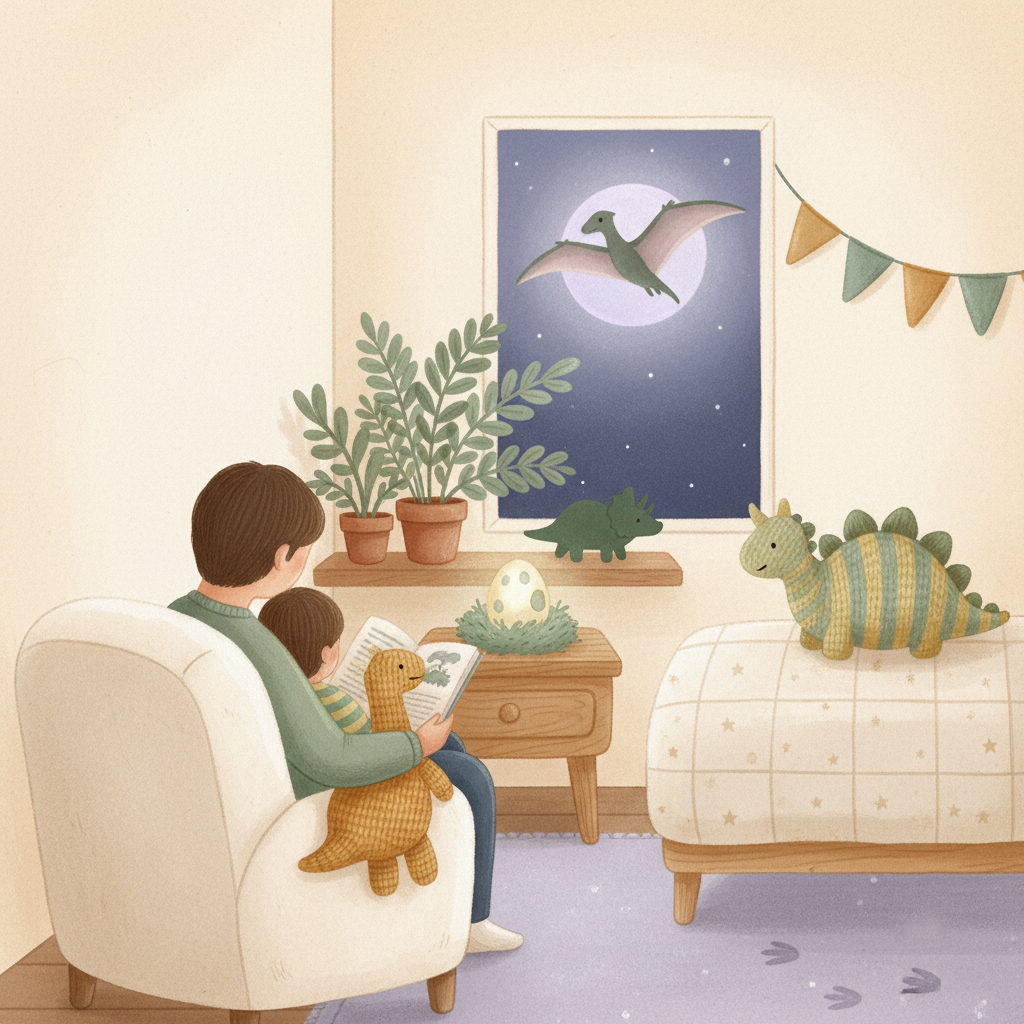
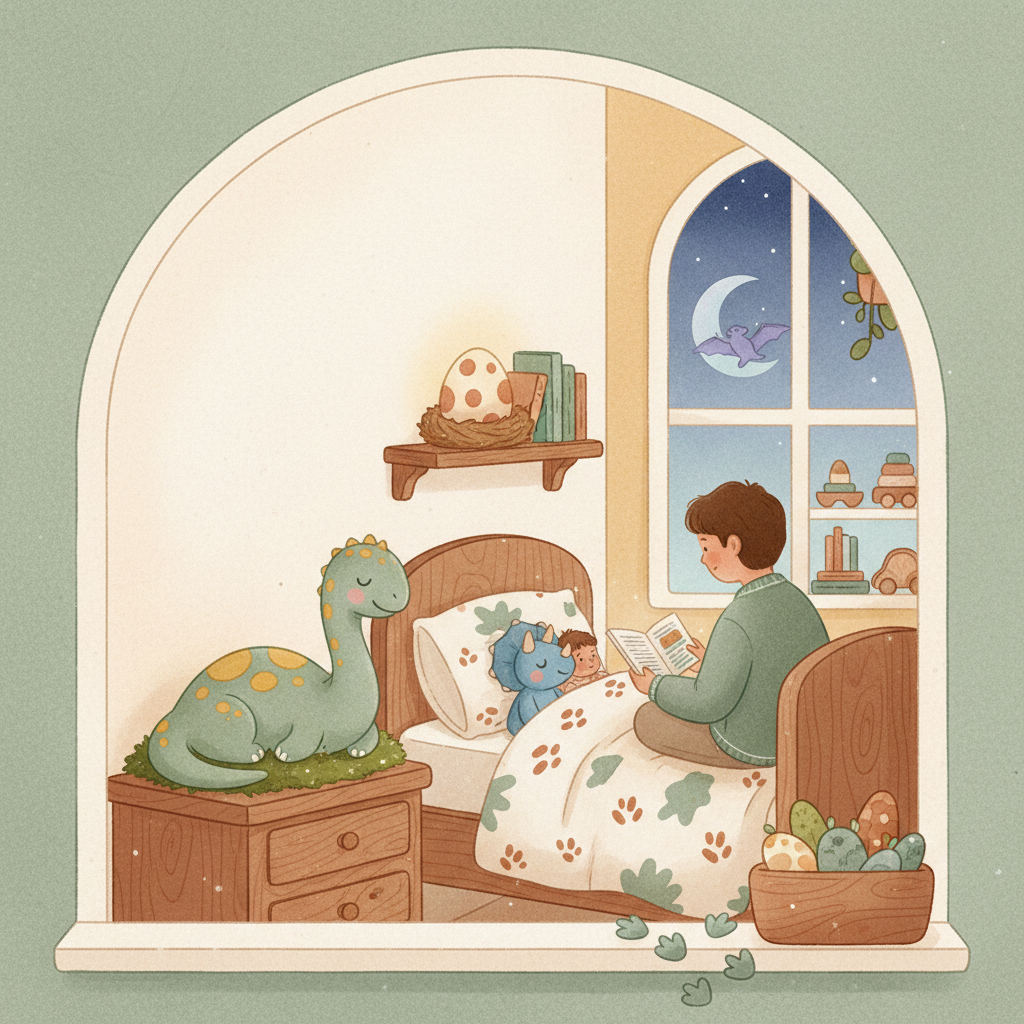
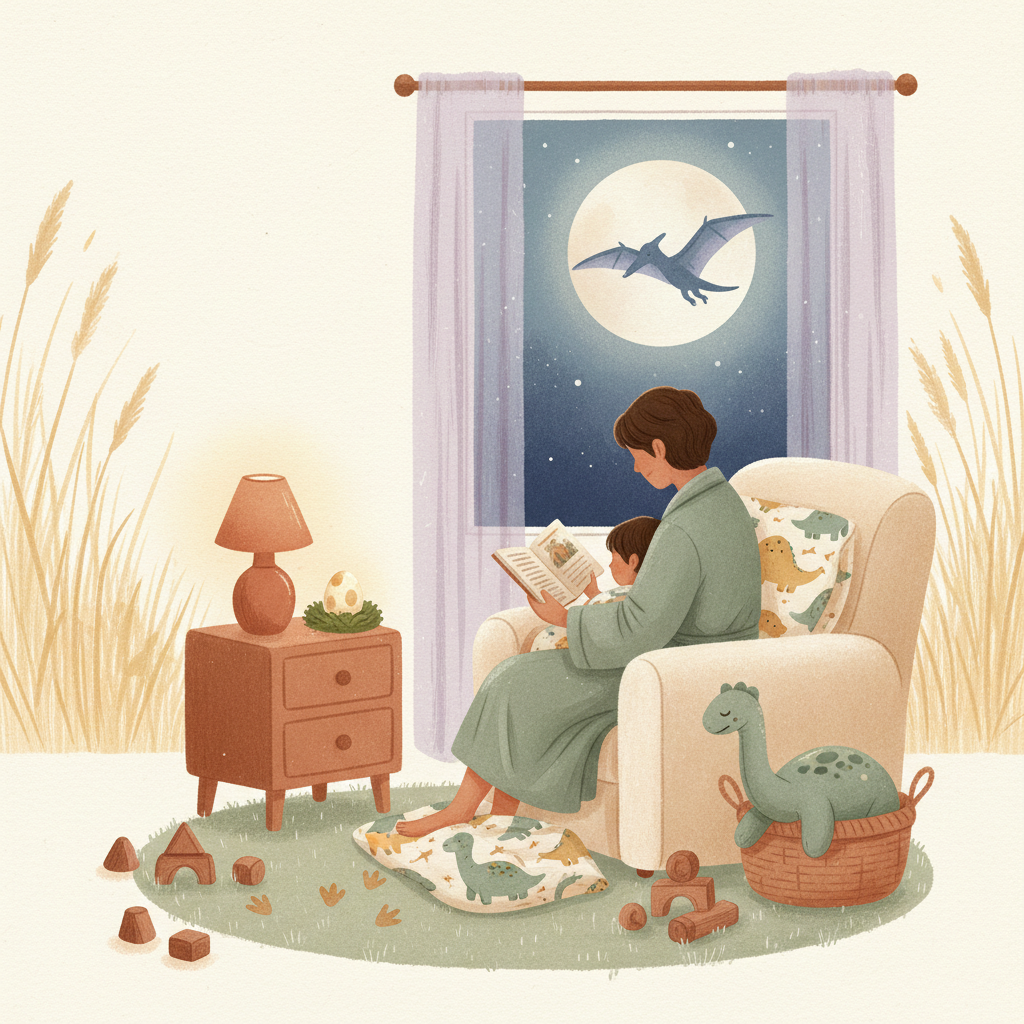
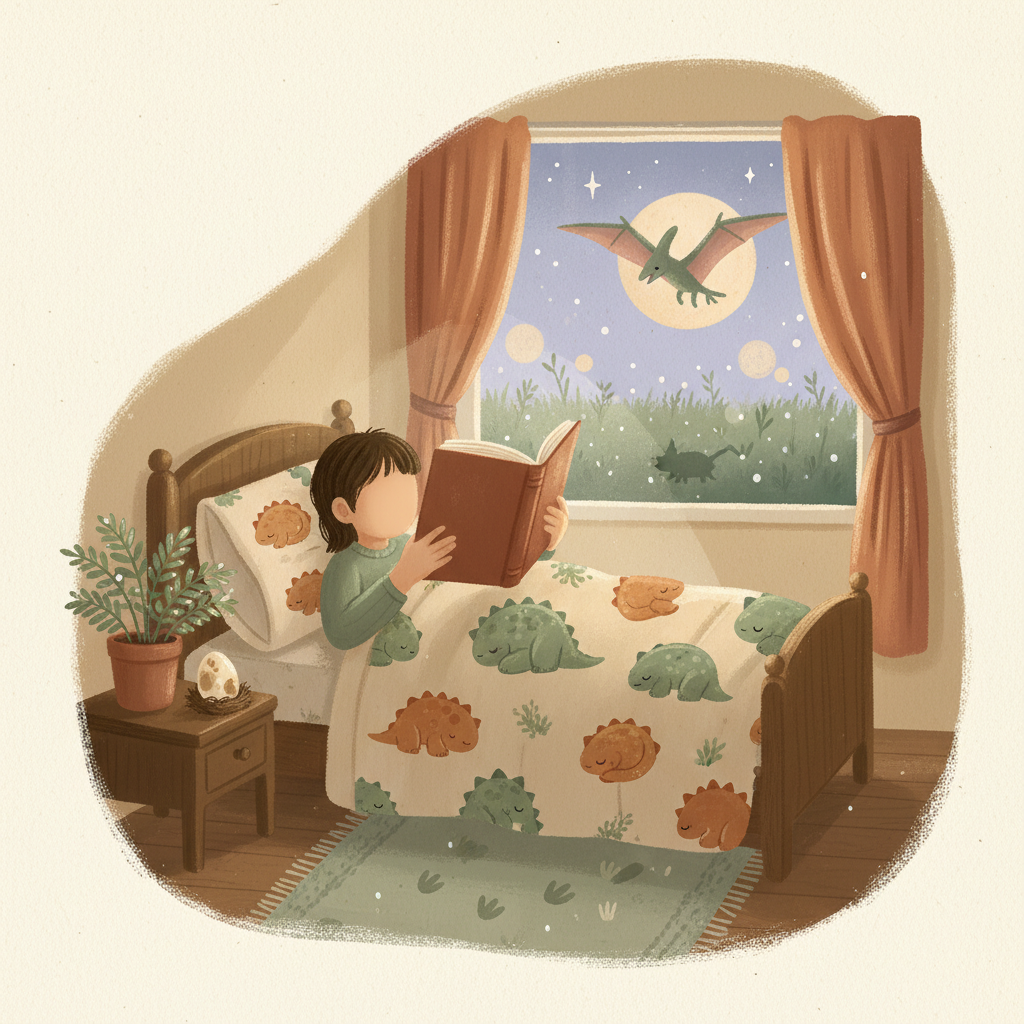
Quiet Play/Reading: This is where the magic truly happens. Engaging in quiet play, perhaps with blocks or puzzles, or snuggling up for a few stories. The American Academy of Pediatrics emphasizes the benefits of reading aloud to children, not just for literacy, but also for fostering close parent-child bonds and creating a sense of calm [https://www.healthychildren.org/English/ages-stages/baby/Routines-and-Bedtime/Pages/Why-is-Reading-to-My-Baby-So-Important.aspx]. Choose books with gentle themes that won't spark too much excitement. You might even read a story about a sleepy brontosaurus.
-
Soft Music or White Noise: Some families find that quiet, classical music or a white noise machine can create a soothing auditory environment, blocking out household sounds and providing a consistent backdrop for sleep.
-
Gentle Massages or Cuddles: A light massage can be incredibly calming, promoting relaxation. Simple back rubs or foot rubs can be incorporated, along with warm hugs and cuddles, offering a final moment of security and connection.
Remember to keep screens out of the bedroom and, ideally, off for at least an hour before bedtime. The blue light emitted by screens can interfere with melatonin production and make it harder for children to fall asleep. Our post on Crafting a Screen-Free Bedtime Routine for Calm Nights offers detailed guidance on this important aspect.
"A consistent bedtime routine offers children a sense of security and predictability, gently guiding them from the day's adventures to the quiet readiness for sleep."
Common Bedtime Routine Challenges and Gentle Solutions
Even with the best intentions, families can encounter bumps on the path to a relaxing bedtime routine for kids. It's important to approach these challenges with patience and understanding, remembering that your child is still learning to navigate their emotions and bodily cues.
-
Resistance to Bedtime: If your little paleontologist protests bedtime, try to understand the underlying reason. Are they genuinely not tired? Do they fear missing out on something? Is it a bid for more connection? Consistency is your greatest ally here. Stick to the routine, even when met with resistance. Offer choices within the routine (e.g., "Do you want to brush your teeth first or put on pajamas?"), which can give them a sense of control. A phased approach to saying goodnight, where you gradually reduce your presence, can also be helpful.
-
Night Wakings: If your child frequently wakes during the night, review their routine and overall sleep environment. Is their room too bright or too noisy? Are they getting enough sleep during the day? The Cleveland Clinic highlights that establishing healthy sleep habits during the day, including appropriate nap times, can contribute to better nighttime sleep [https://my.clevelandclinic.org/health/articles/14467-sleep-for-kids]. Ensure their room is dark, quiet, and a comfortable temperature.
-
Over-Tiredness: Counterintuitively, an overtired child can have more difficulty falling asleep. They may become hyperactive or irritable. If you suspect overtiredness, consider moving bedtime slightly earlier for a few nights to see if it makes a difference. This might seem counterintuitive, but helping them catch that natural sleep wave can be incredibly effective.
-
"One More" Requests: The classic requests for "one more story," "one more drink," or "one more hug" are often bids for connection or a way to delay the inevitable. Acknowledge their feelings, but gently redirect back to the routine. For example, "We've had our stories, and now it's time for sleep, but I'll be right here in the morning for more hugs." Establish clear boundaries about the number of stories or songs beforehand.
Remember, every child is unique, and what works beautifully for one family might need gentle adjustments for another. The goal isn't perfection, but rather progress and a growing sense of calm and predictability around bedtime.
For a calm 60-second bedtime ritual app for dinosaur-loving kids, consider trying My Little Dino to gently guide your child into dreamland. Join the waitlist and discover a new path to peaceful evenings.
Gentle Reminder
The information provided in this article is for educational purposes only and is not intended to be a substitute for professional medical advice, description, or approaches. Always seek the advice of your pediatrician or other qualified health provider with any questions you may have regarding a medical condition or health objectives. Never disregard professional medical advice or delay in seeking it because of something you have read here regarding your child's sleep, behavior, or health concerns.
Sources
- American Academy of Pediatrics - A Good Night's Sleep Can Help Your Child Do Better in School
- Sleep Foundation - Bedtime Routine
- National Institutes of Health - How Sleep Affects Your Health
- Sleep Foundation - How Much Sleep Do Children Need
- American Academy of Pediatrics - Why is Reading to My Baby So Important
- Cleveland Clinic - Sleep for Kids
My Little Dino
A calm 60-second bedtime ritual for dinosaur-loving little ones.
Parent-led, screen-soft, and made for 3–7 year olds who'd rather hear about a sleepy brontosaurus than brush their teeth.
Sources
- A Good Night's Sleep Can Help Your Child Do Better in School — American Academy of Pediatrics
- Bedtime Routine — Sleep Foundation
- How Sleep Affects Your Health — National Institutes of Health
- How Much Sleep Do Children Need — Sleep Foundation
- Why is Reading to My Baby So Important — American Academy of Pediatrics
- Sleep for Kids — Cleveland Clinic
Educational content only. Not medical advice. Please consult your pediatrician about sleep concerns.