Crafting a No-Screen Bedtime Routine for Kids
Crafting a No-Screen Bedtime Routine for Kids: A Gentle Path to Peaceful Sleep
As parents, we're always looking for ways to nurture our children's well-being, and a calm, consistent bedtime routine is a cornerstone of this care. In our increasingly digital world, creating a no-screen bedtime routine for kids offers a wonderful opportunity to help your little paleontologist transition from the day's adventures to a night of restorative sleep. This approach is not about deprivation, but rather about providing a gentle, predictable sequence of events that signals to the body and mind that it's time to wind down. Many families find that removing screens before bed can significantly impact their child's ability to relax and drift off to sleep more easily.
Why Go Screen-Free Before Bed?
The glow of screens, whether from a tablet, TV, or phone, emits blue light that can interfere with the body's natural sleep-wake cycle. According to the American Academy of Pediatrics (AAP), exposure to blue light in the evening can suppress the production of melatonin, a hormone critical for sleep initiation [https://www.healthychildren.org/English/healthy-living/sleep/Pages/Healthy-Sleep-Habits-for-School-Aged-Children.aspx]. This isn't just about brightness; it's about the specific wavelength of light that signals to our brains that it's still daytime. For our little ones, whose developing bodies are still learning to regulate these rhythms, this can make it harder to fall asleep and stay asleep. The Sleep Foundation further explains that the stimulating content often found on screens can also keep children's minds active, making it difficult for them to relax and prepare for rest [https://www.sleepfoundation.org/children-and-sleep/screens-before-bed].
Beyond the physiological effects, the interactive nature of screens can be highly engaging, making it hard for children to power down their brains. Think about the exciting adventures your tiny T-rex fan might be having during playtime or how deeply engaged they might be with a favorite show; these activities, while fun, often leave children feeling more alert rather than calm. A screen-free period before bed allows for a mental cool-down, preparing their minds for dreams rather than stimulating them further. Pediatric experts often suggest establishing a wind-down period of at least an hour before bedtime, free from screens, to support healthy sleep habits. You can learn more about establishing calming routines in our post Crafting a Soothing Evening Routine for Your Little One.
Building Your Serene Transition
Crafting a no-screen bedtime routine for kids doesn't have to be complicated. The key is consistency and a sequence of calming activities. Many parents find success by starting the wind-down process about an hour to an hour and a half before their child's target bedtime. This allows ample time for relaxation without feeling rushed. The goal is to create a predictable rhythm that your child will recognize as the gentle prelude to sleep.
Here are some elements many families incorporate into their screen-free bedtime routines:
-
Warm Bath or Shower: A warm bath can be incredibly relaxing, helping to soothe muscles and signal to the body that it's time to slow down. The change in body temperature after getting out of the bath can also promote sleepiness. According to the Mayo Clinic, a warm bath or shower before bed can help improve sleep quality [https://www.mayoclinic.org/diseases-conditions/insomnia/expert-answers/sleep-and-weight-gain/faq-20058153]. Make it extra special with some gentle bubble bath or fun-shaped soaps for a supports.
-
Quiet Play or Puzzles: Before it's time to fully settle down, a bit of quiet, imaginative play can be a wonderful bridging activity. Think building blocks, drawing, or simple puzzles that engage their minds without being overly stimulating. This allows them to use any remaining energy in a calm way. Avoid games that are fast-paced or require quick decisions, as these can ramp up their energy levels.
-
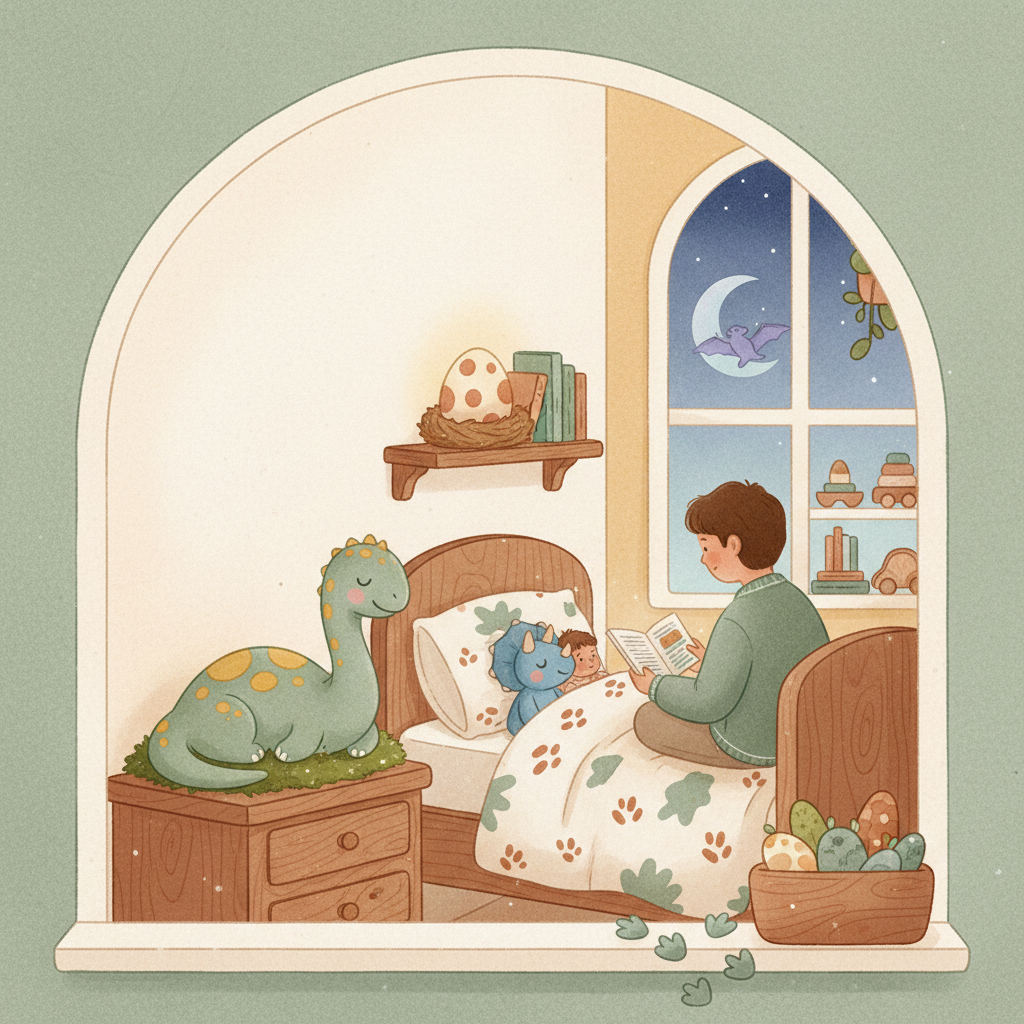
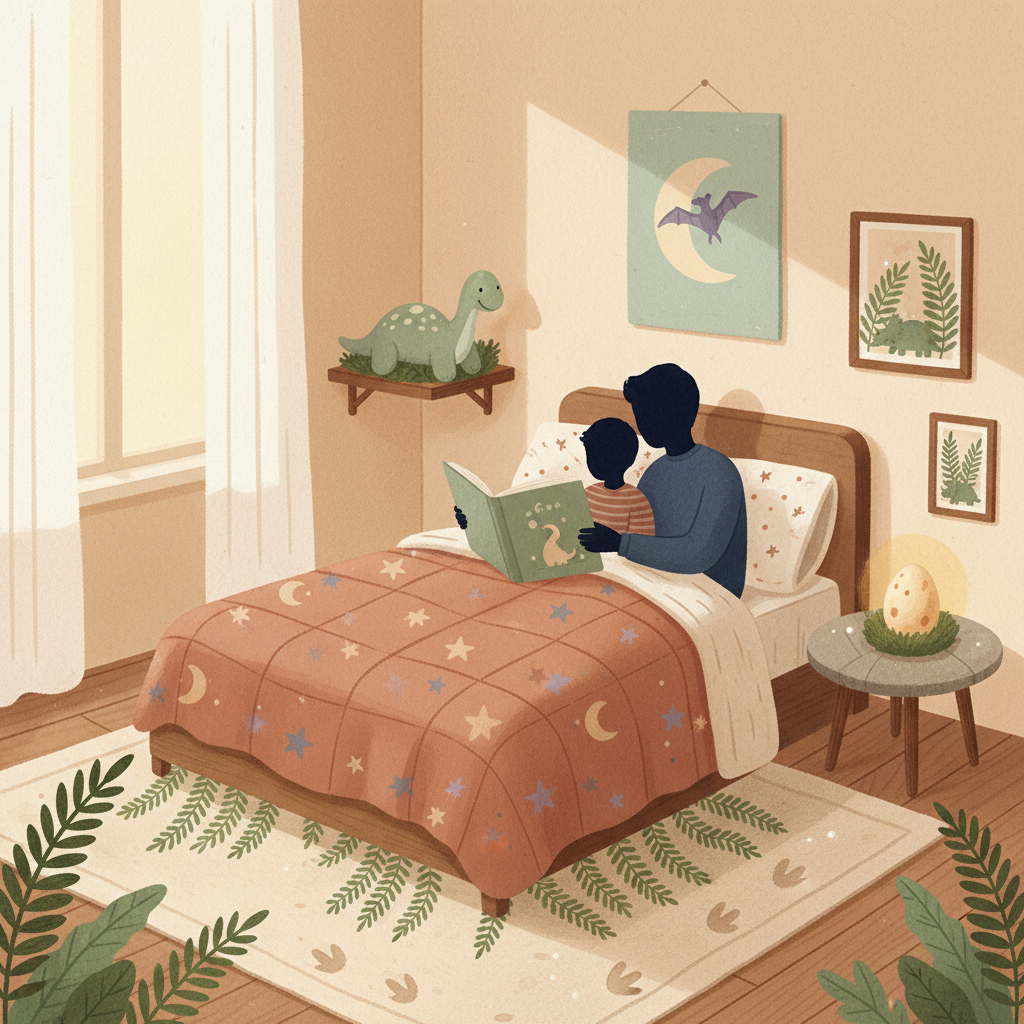
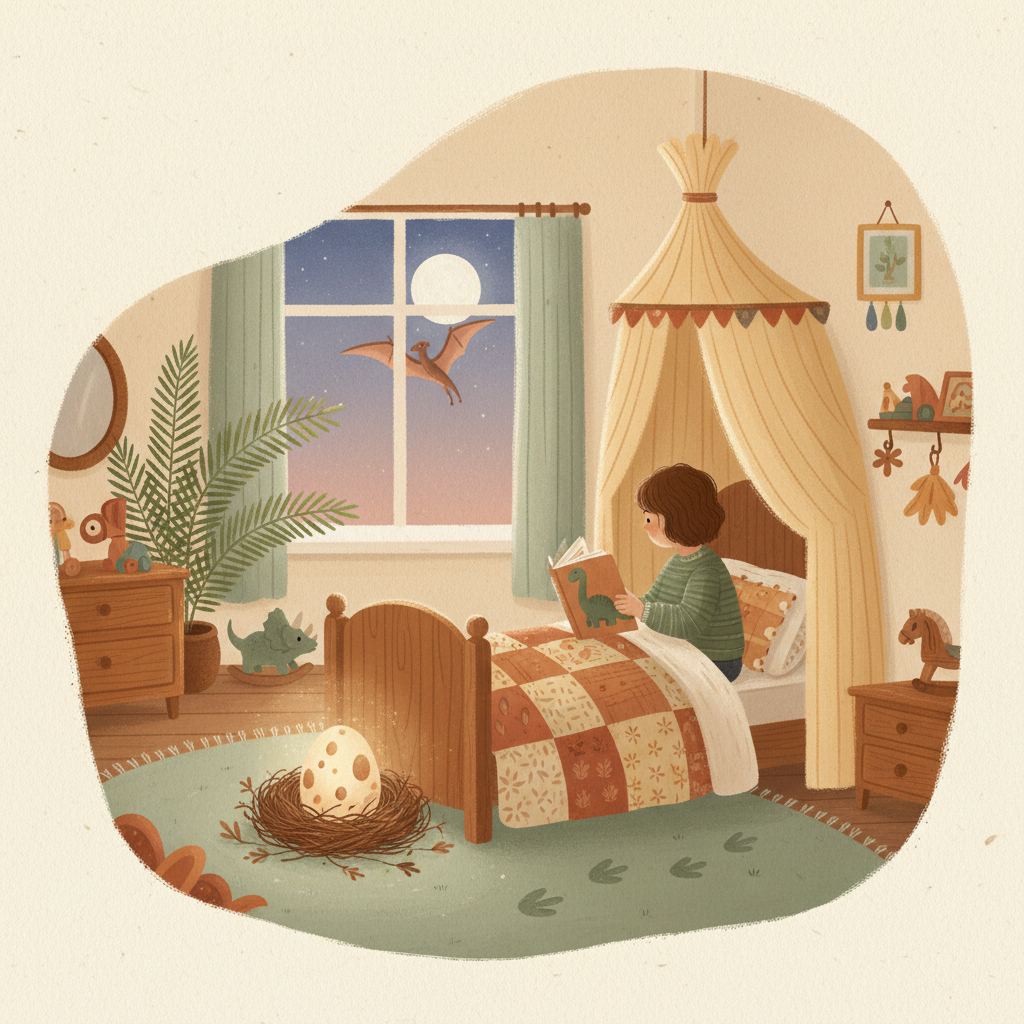
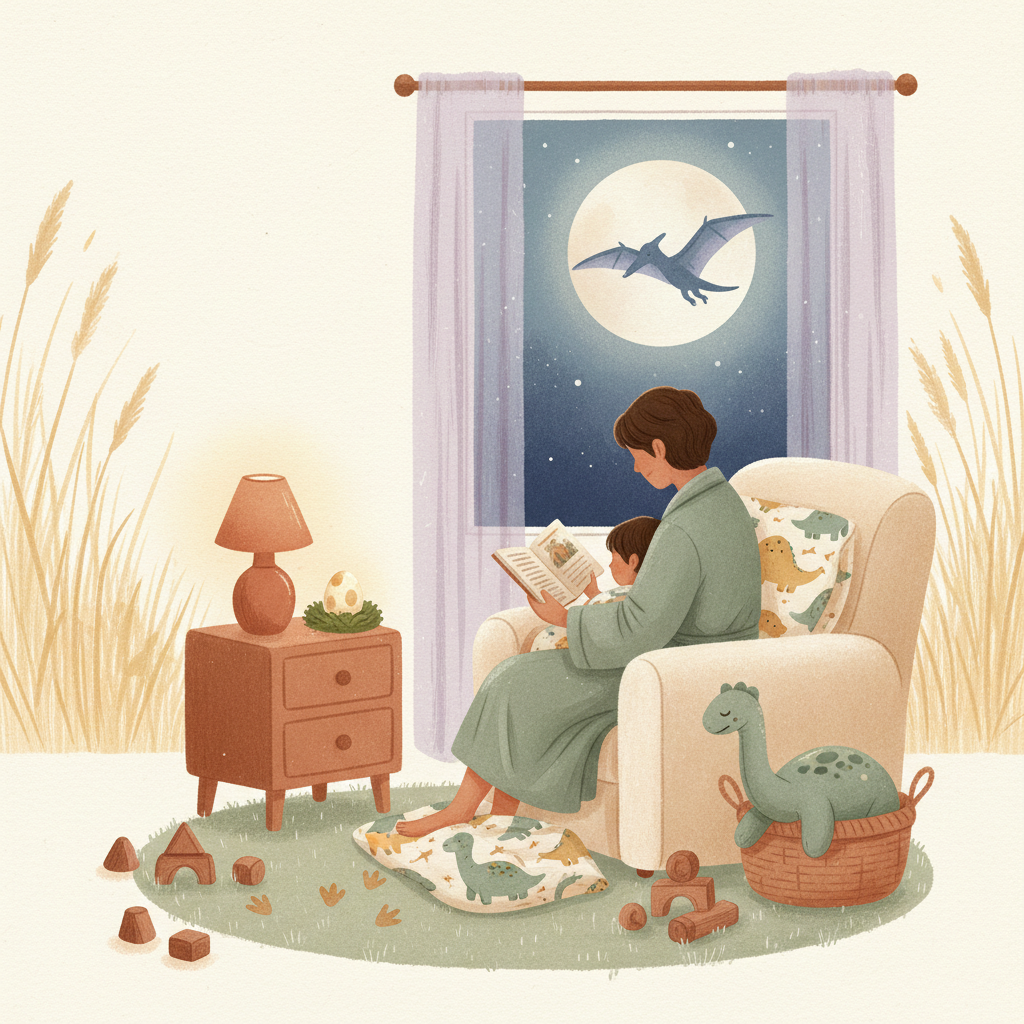
Reading Together: This is a classic for a reason! Snuggling up with a good book is a fantastic way to connect and unwind. Let your child choose a few beloved stories, or surprise them with a new adventure. Reading aloud not only fosters a love for books but also provides a calming voice and a shared moment of closeness. The repetition of favorite stories can be very soothing. The National Institutes of Health (NIH) emphasizes the importance of reading aloud for children's development, including promoting relaxation [https://www.nih.gov/news-events/news-releases/nih-study-finds-reading-aloud-children-may-positively-affect-brain-activity].
-
Gentle Conversation or Storytelling: This is a beautiful opportunity to connect with your child. You might talk about their favorite part of the day, what they're looking forward to tomorrow, or simply engage in some imaginative storytelling. Perhaps you can tell a tale about a brave baby brontosaurus finding a cozy spot to sleep, weaving in elements of calm and comfort. This personal interaction strengthens your bond and helps them feel secure.
-
Calming Music or White Noise: Soft, instrumental music or a white noise machine can help block out distracting sounds and create a peaceful auditory environment. Many children find the consistent hum of white noise to be very comforting and conducive to sleep. The Sleep Foundation highlights how consistent ambient sound can help mask disruptions and create a relaxing environment [https://www.sleepfoundation.org/bedroom-environment/white-noise-for-sleep].
A calm parent checklist
For families who want one practical place to start, keep the evening plan simple, repeatable, and easy for a tired child to recognize. The goal is not perfection. It is a steady rhythm: a quiet cue, a predictable order, and a gentle finish that parents can repeat most nights without turning bedtime into a long negotiation.
- Choose two or three steps that already fit your home.
- Keep the order familiar, even when the exact timing changes.
- Let the room, lights, and voice signal that the day is slowing down.
- Save big conversations, rough play, and stimulating choices for earlier in the evening.
For broader context, parents can compare their routine with trusted sleep education such as American Academy of Pediatrics. My Little Dino can sit inside that routine as a short, cozy dinosaur moment when families want a softer transition into the final part of the night.
A calm parent checklist
For families who want one practical place to start, keep the evening plan simple, repeatable, and easy for a tired child to recognize. The goal is not perfection. It is a steady rhythm: a quiet cue, a predictable order, and a gentle finish that parents can repeat most nights without turning bedtime into a long negotiation.
- Choose two or three steps that already fit your home.
- Keep the order familiar, even when the exact timing changes.
- Let the room, lights, and voice signal that the day is slowing down.
- Save big conversations, rough play, and stimulating choices for earlier in the evening.
For broader context, parents can compare their routine with trusted sleep education such as American Academy of Pediatrics. My Little Dino can sit inside that routine as a short, cozy dinosaur moment when families want a softer transition into the final part of the night.
My Little Dino
A calm 60-second bedtime ritual for dinosaur-loving little ones.
Parent-led, screen-soft, and made for 3–7 year olds who'd rather hear about a sleepy brontosaurus than brush their teeth.
Sources
- Healthy Sleep Habits for School-Aged Children — American Academy of Pediatrics
- Screens Before Bed and Children's Sleep — The Sleep Foundation
- Insomnia: Can too little sleep make you gain weight? — Mayo Clinic
- NIH study finds reading aloud to children may positively affect brain activity — National Institutes of Health
- White Noise for Sleep — The Sleep Foundation
Educational content only. Not medical advice. Please consult your pediatrician about sleep concerns.